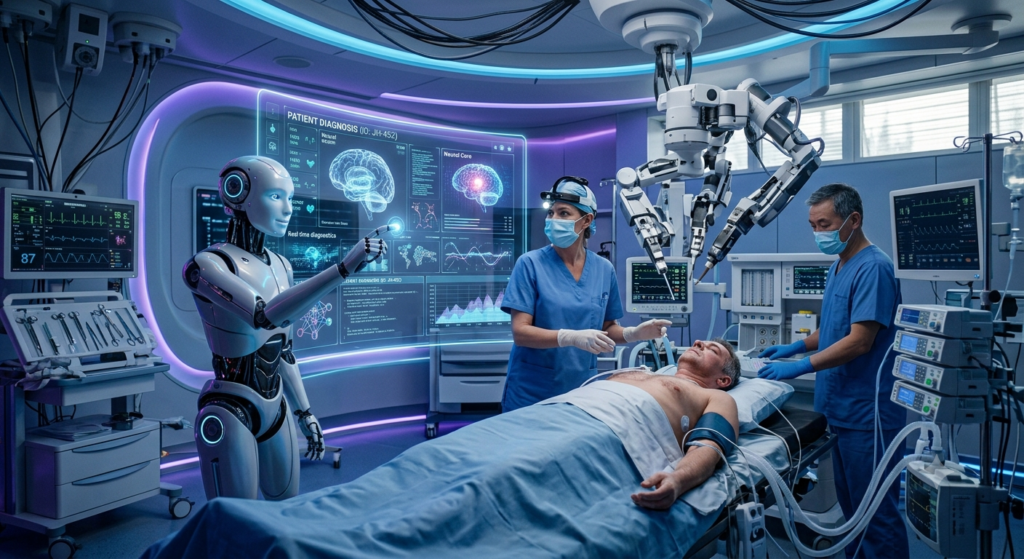

Artificial Intelligence (AI) is revolutionizing healthcare by helping doctors diagnose diseases faster, improving patient care, and making hospitals more efficient. From detecting cancer in its early stages to assisting during complex surgeries, AI is becoming one of the most valuable technologies in modern medicine.
Healthcare providers worldwide are investing in AI-powered solutions to improve accuracy, reduce costs, and deliver better outcomes for patients. Understanding how AI is changing healthcare can help patients, professionals, and businesses prepare for the future of medicine.
What Is AI in Healthcare?
AI in healthcare refers to the use of intelligent computer systems that analyze medical data, recognize patterns, and assist healthcare professionals in making informed decisions. These systems learn from large datasets and continuously improve their performance over time.
AI is not replacing doctors. Instead, it acts as a powerful assistant that helps medical professionals make faster and more accurate decisions.
Benefits of AI in Healthcare
Artificial Intelligence offers numerous advantages for patients and healthcare providers.
Some of the biggest benefits include:
- Faster disease diagnosis
- Improved treatment planning
- Early detection of serious illnesses
- Reduced medical errors
- Personalized patient care
- Faster hospital operations
- Better medical research
- Lower healthcare costs
These benefits are helping hospitals improve patient outcomes while increasing operational efficiency.
Common Applications of AI in Medicine
Medical Imaging
AI analyzes X-rays, CT scans, and MRI images to detect diseases more quickly and accurately.
Drug Discovery
Researchers use AI to identify potential medicines and speed up pharmaceutical development.
Virtual Health Assistants
AI-powered chatbots answer health-related questions, schedule appointments, and remind patients to take medications.
Robotic Surgery
Advanced robotic systems assist surgeons by improving precision during complex procedures.
Predictive Analytics
Hospitals use AI to predict patient risks and prevent serious complications before they occur.
How AI Improves Patient Care
AI allows doctors to spend less time on paperwork and more time caring for patients. Intelligent systems organize medical records, monitor patient health, and recommend treatment options based on current medical evidence.
This leads to:
- Faster appointments
- More accurate diagnoses
- Better communication
- Improved patient satisfaction
Challenges of AI in Healthcare
Despite its many advantages, AI also presents challenges.
These include:
- Protecting patient privacy
- Maintaining data security
- High implementation costs
- Ethical concerns
- Regulatory compliance
- Dependence on high-quality data
Healthcare organizations must address these issues to ensure responsible AI adoption.
The Future of AI in Healthcare
Experts believe AI will continue transforming medicine over the next decade. Future innovations may include personalized treatment plans, advanced robotic surgery, wearable health monitoring devices, and faster diagnosis of rare diseases.
As technology evolves, AI will become an essential partner for healthcare professionals rather than a replacement for human expertise.
Frequently Asked Questions
Can AI replace doctors?
No. AI supports healthcare professionals by providing data analysis and decision-making assistance, but human expertise remains essential.
Is AI accurate in medical diagnosis?
Many AI systems have demonstrated impressive accuracy in detecting certain diseases, especially when combined with professional medical evaluation.
Is patient information safe with AI?
Healthcare providers must follow strict privacy and security regulations to protect patient information while using AI technologies.
Final Thoughts
Artificial Intelligence is reshaping healthcare by improving diagnosis, treatment, research, and patient care. As hospitals and medical professionals continue adopting AI solutions, patients can expect faster, safer, and more personalized healthcare services. Learning about AI in medicine today provides valuable insight into the future of healthcare.