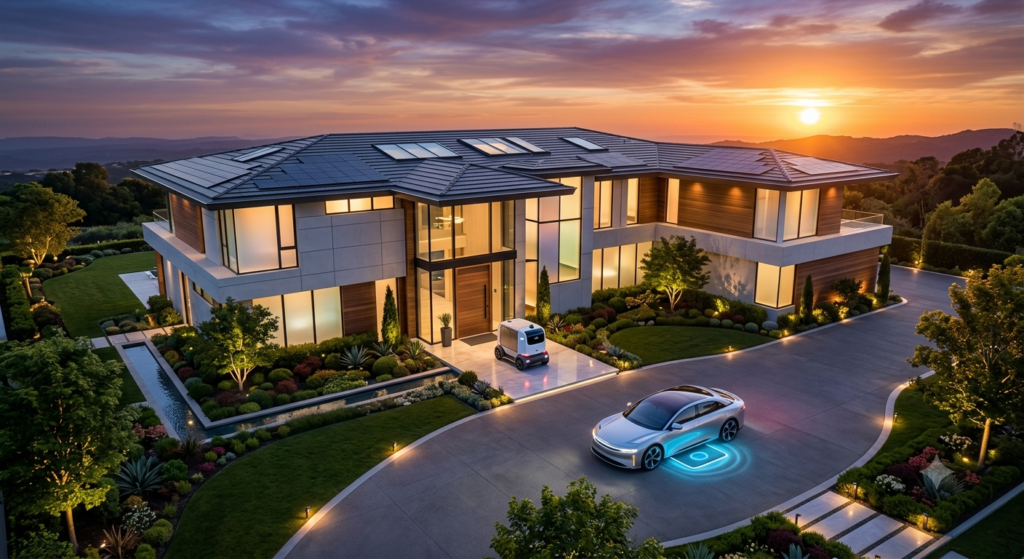

Artificial Intelligence (AI) is transforming modern homes into intelligent living spaces that are more convenient, secure, and energy-efficient. Smart home technology powered by AI allows homeowners to control lighting, security cameras, appliances, heating, and entertainment systems using voice commands or mobile applications.
As AI technology continues to evolve, smart homes are becoming increasingly popular across the United States and around the world.
What Is AI in Smart Homes?
AI in smart homes refers to intelligent systems that learn homeowners’ habits and automatically manage household devices. These systems analyze daily routines, optimize energy usage, improve home security, and make everyday living more comfortable.
Unlike traditional automation, AI continuously learns and adapts to user preferences over time.
Benefits of AI-Powered Smart Homes
Artificial Intelligence offers several advantages for homeowners.
Some of the most important benefits include:
- Automated home management
- Lower energy consumption
- Improved home security
- Voice-controlled devices
- Smart lighting automation
- Intelligent climate control
- Remote home monitoring
- Increased convenience
These features help homeowners save time, reduce utility bills, and enjoy a more comfortable lifestyle.
Common Applications of AI in Smart Homes
Smart Voice Assistants
AI assistants allow users to control lights, music, appliances, and other connected devices using simple voice commands.
Intelligent Security Systems
AI-powered security cameras recognize unusual activity and send instant alerts to homeowners.
Smart Thermostats
AI automatically adjusts indoor temperatures based on weather conditions and daily routines.
Energy Management
Smart systems monitor electricity usage and optimize energy consumption to reduce costs.
Smart Appliances
AI-powered refrigerators, washing machines, and ovens improve household efficiency through intelligent automation.
How AI Improves Daily Living
Artificial Intelligence simplifies everyday tasks by automating routine activities. Homeowners can schedule appliances, receive maintenance alerts, monitor their homes remotely, and manage multiple devices from a single mobile application.
This creates a safer, more efficient, and more comfortable living environment.
Challenges of AI in Smart Homes
Despite its advantages, AI-powered homes also face challenges.
These include:
- Privacy concerns
- Cybersecurity risks
- Internet dependence
- Device compatibility
- Initial installation costs
- Software updates
Choosing trusted smart home devices and maintaining strong security practices helps reduce these risks.
The Future of Smart Homes
Future smart homes will become even more intelligent through predictive automation, AI-powered personal assistants, advanced home robots, and integrated energy management systems. Homes will automatically adapt to homeowners’ lifestyles, making everyday living more efficient than ever before.
Frequently Asked Questions
Is AI in smart homes safe?
Yes. When devices are properly secured with strong passwords and regular software updates, AI smart homes are generally safe to use.
Can AI reduce electricity bills?
Yes. Smart thermostats, intelligent lighting, and energy management systems help reduce unnecessary power consumption.
Do smart homes require the internet?
Most AI-powered smart home systems require an internet connection for full functionality, although some features may work locally.
Final Thoughts
Artificial Intelligence is redefining modern living through intelligent automation, enhanced security, and improved energy efficiency. As smart home technology continues to advance, homeowners can expect even greater convenience, comfort, and control over their living environments. Investing in AI-powered home solutions today is a step toward a smarter future.