
AI in Education: How Artificial Intelligence Is Transforming Learning in 2026
Artificial Intelligence (AI) is changing the education system faster than ever before. Schools, universities, and online learning platforms are using AI to create personalized learning experiences, automate administrative tasks, and help students understand complex subjects more effectively.
From AI tutors to automated grading systems, artificial intelligence is making education more accessible, efficient, and engaging for learners around the world.
What Is AI in Education?
AI in education refers to the use of intelligent software and machine learning technologies to improve teaching and learning. These systems analyze student performance, recommend personalized study materials, and provide instant feedback.
Rather than replacing teachers, AI supports educators by handling repetitive tasks and helping them focus more on student development.
Benefits of AI in Education
Artificial Intelligence provides several advantages for students and teachers.
Some of the key benefits include:
- Personalized learning experiences
- Instant feedback on assignments
- Improved student engagement
- Faster grading and assessment
- Better classroom management
- 24/7 access to AI tutors
- Reduced administrative workload
- Enhanced online learning
Applications of AI in Modern Classrooms
Personalized Learning
AI analyzes each student’s strengths and weaknesses to recommend customized learning paths.
AI Tutors
Virtual tutors answer questions, explain difficult concepts, and help students study anytime.
Automated Grading
Teachers save valuable time by using AI to grade quizzes, assignments, and exams.
Language Learning
AI-powered language apps improve pronunciation, grammar, and vocabulary through interactive lessons.
Educational Analytics
Schools use AI to identify students who may need additional academic support.
Challenges of AI in Education
While AI offers many benefits, there are also challenges.
These include:
- Data privacy concerns
- High implementation costs
- Internet accessibility
- Teacher training requirements
- Ethical use of AI
- Overdependence on technology
Educational institutions must balance innovation with responsible implementation.
Future of AI in Education
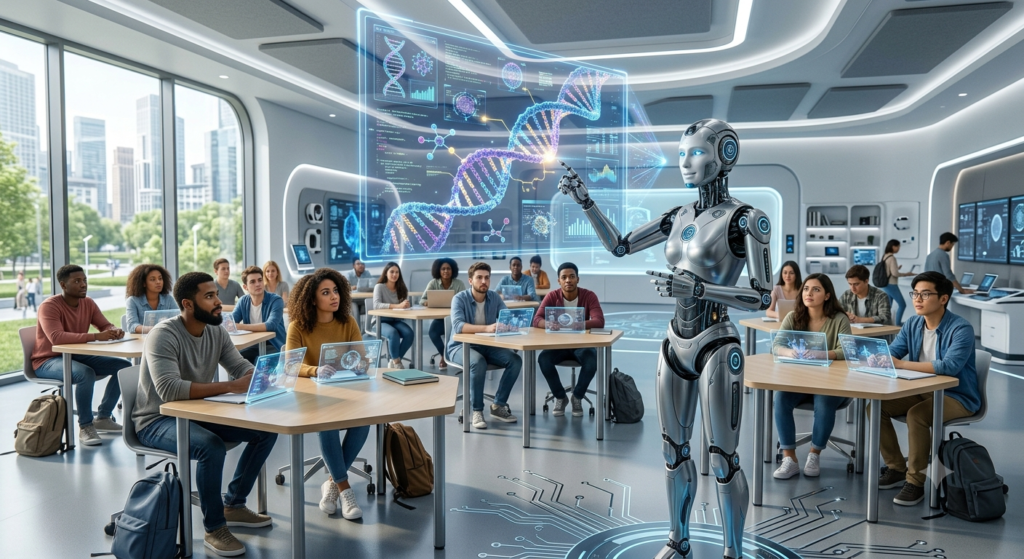
The future of education will become increasingly personalized through AI. Smart classrooms, virtual reality learning, intelligent tutoring systems, and adaptive learning platforms will continue improving the educational experience for millions of students worldwide.
As technology evolves, AI will become an essential tool that helps both teachers and students achieve better learning outcomes.
Frequently Asked Questions
Can AI replace teachers?
No. AI supports teachers by automating repetitive tasks while educators continue providing guidance, motivation, and human interaction.
Is AI useful for online learning?
Yes. AI improves online education by offering personalized lessons, instant feedback, and interactive learning experiences.
Is AI education expensive?
Many AI learning platforms offer free versions, while advanced features are available through premium subscriptions.
Final Thoughts
Artificial Intelligence is reshaping education by making learning more personalized, efficient, and accessible. As schools and universities continue adopting AI technologies, students will benefit from smarter learning experiences and teachers will gain powerful tools to improve classroom instruction. Understanding AI today prepares learners for the future of education.