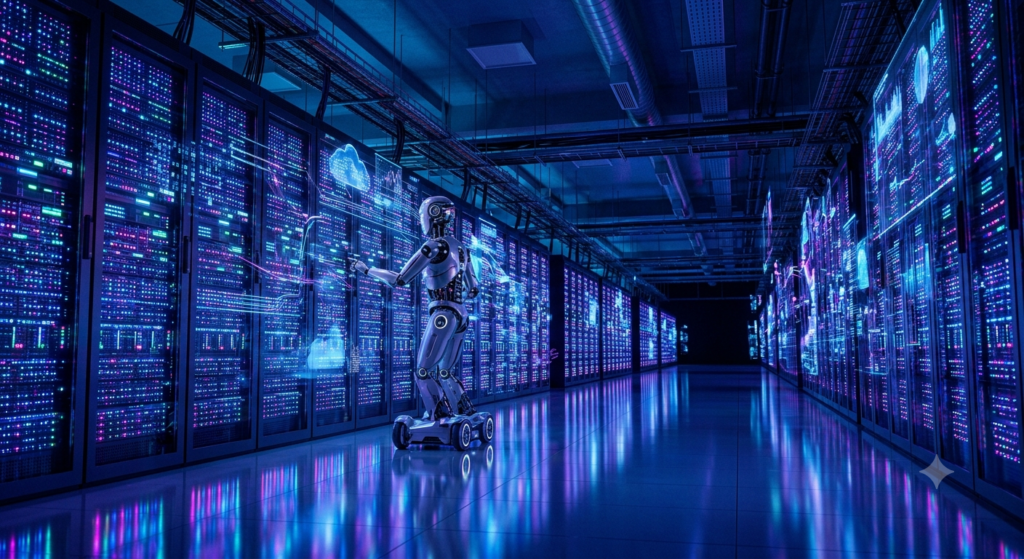

Artificial Intelligence (AI) is no longer just a futuristic concept. It has become a part of everyday life, helping people communicate, work, shop, learn, and solve problems more efficiently. From virtual assistants and self-driving technology to healthcare and finance, AI is transforming industries across the globe.
As businesses continue to adopt intelligent systems, understanding how artificial intelligence works has become more important than ever.
What Is Artificial Intelligence?
Artificial Intelligence is a branch of computer science that enables machines to perform tasks that normally require human intelligence. These tasks include learning, reasoning, recognizing images, understanding language, making decisions, and solving complex problems.
Unlike traditional software that follows fixed instructions, AI systems improve over time by learning from data and user interactions.
How Does Artificial Intelligence Work?
AI systems are trained using large amounts of data. They identify patterns, learn relationships, and make predictions based on previous information.
The main technologies behind AI include:
- Machine Learning
- Deep Learning
- Natural Language Processing (NLP)
- Computer Vision
- Robotics
- Neural Networks
Together, these technologies allow AI to perform increasingly complex tasks with remarkable accuracy.
Everyday Uses of AI
Artificial intelligence has become part of daily life in many ways.
Common examples include:
- Voice assistants
- Online shopping recommendations
- AI chatbots
- Navigation apps
- Smart home devices
- Language translation
- Facial recognition
- Fraud detection
- Medical diagnosis
- Personalized entertainment recommendations
Most people interact with AI several times each day without realizing it.
Benefits of Artificial Intelligence
AI offers numerous advantages across different industries.
Some of the biggest benefits include:
- Increased productivity
- Faster decision-making
- Reduced human error
- Better customer service
- Automation of repetitive tasks
- Improved healthcare
- Enhanced cybersecurity
- Smarter business operations
Organizations use AI to save time, reduce costs, and improve efficiency.
Challenges of Artificial Intelligence
Despite its advantages, AI also presents important challenges.
These include:
- Privacy concerns
- Data security risks
- Ethical issues
- Bias in AI systems
- Job displacement in certain industries
- High development costs
Responsible AI development requires transparency, fairness, and human oversight.
Industries Using Artificial Intelligence
Today, AI is transforming almost every major industry.
These include:
- Healthcare
- Banking
- Education
- Manufacturing
- Transportation
- Retail
- Marketing
- Agriculture
- Cybersecurity
- Entertainment
Businesses that successfully adopt AI often gain a competitive advantage through greater efficiency and innovation.
The Future of AI
Artificial Intelligence is expected to become even more advanced over the next decade. Future developments may include smarter robots, improved healthcare diagnostics, more personalized education, and advanced business automation.
As AI technology continues to evolve, learning how to work alongside intelligent systems will become an increasingly valuable skill.
Frequently Asked Questions
Is Artificial Intelligence the same as Machine Learning?
No. Machine Learning is a subset of Artificial Intelligence. AI is the broader field, while Machine Learning focuses on systems that learn from data.
Is AI replacing human jobs?
AI automates some tasks, but it also creates new career opportunities in technology, engineering, healthcare, education, and business.
Can beginners learn AI?
Yes. Many free and paid online resources make it possible for beginners to understand AI concepts and practical applications.
Final Thoughts
Artificial Intelligence is shaping the future of work, business, healthcare, and everyday life. By understanding how AI works and where it is used, individuals can prepare for new opportunities and make informed decisions in an increasingly digital world. Learning about AI today is an investment in the future.