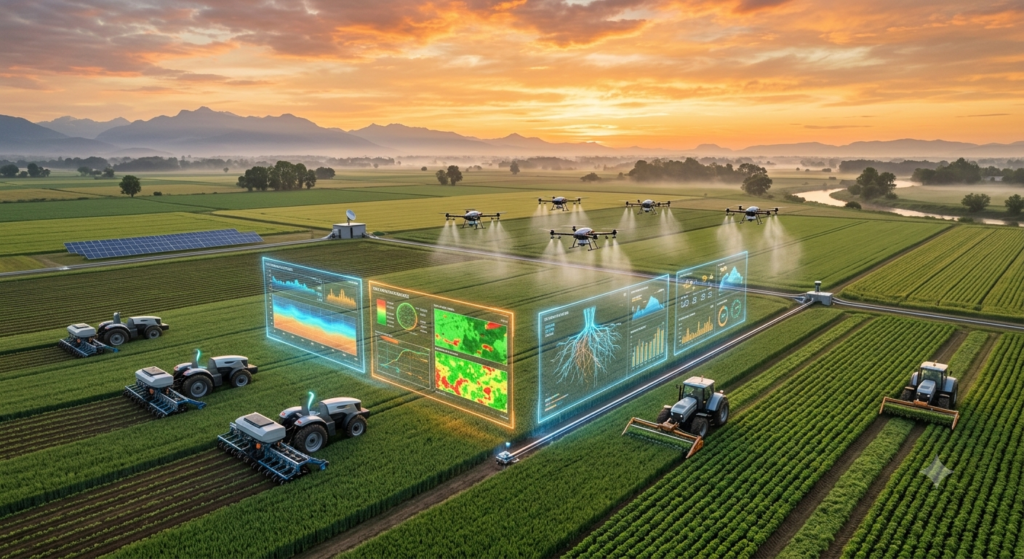
Artificial Intelligence (AI) is transforming agriculture by helping farmers produce more food while using fewer resources. Smart farming technologies powered by AI can monitor crop health, predict weather conditions, automate irrigation, detect plant diseases, and improve harvest quality. As the global demand for food continues to rise, AI is becoming one of the most valuable tools for modern agriculture.
From small family farms to large commercial operations, AI is helping farmers make better decisions and increase productivity.
What Is AI in Agriculture?
AI in agriculture refers to the use of machine learning, computer vision, robotics, and data analytics to improve farming operations. These intelligent systems collect information from drones, sensors, satellites, and farm equipment to help farmers monitor crops and optimize production.
Instead of relying only on manual inspections, AI provides real-time insights that improve efficiency and reduce waste.
Benefits of AI in Agriculture
Artificial Intelligence offers several advantages for modern farming.
Some of the major benefits include:
- Higher crop yields
- Early disease detection
- Smart irrigation management
- Reduced pesticide use
- Lower farming costs
- Better weather forecasting
- Improved soil analysis
- Increased operational efficiency
These benefits help farmers grow healthier crops while protecting natural resources.
Common Applications of AI in Farming
Crop Monitoring
AI-powered drones and satellites monitor crop health, detect nutrient deficiencies, and identify stressed plants before problems become serious.
Precision Irrigation
Smart irrigation systems automatically provide the right amount of water based on soil moisture and weather conditions.
Disease Detection
Computer vision technology identifies plant diseases early, allowing farmers to take action before crops are damaged.
Autonomous Farm Equipment
Self-driving tractors and robotic harvesters perform planting, spraying, and harvesting with high precision.
Yield Prediction
AI analyzes historical data, weather patterns, and crop conditions to predict future harvests more accurately.
How AI Improves Sustainable Farming
Artificial Intelligence supports environmentally friendly farming by reducing water consumption, minimizing chemical usage, and improving resource management. Farmers can increase productivity while lowering their environmental impact.
This makes agriculture more sustainable for future generations.
Challenges of AI in Agriculture
Despite its many advantages, AI adoption also comes with challenges.
These include:
- High equipment costs
- Internet connectivity in rural areas
- Technical training requirements
- Data management
- Equipment maintenance
- Initial investment
Governments and technology companies continue developing affordable AI solutions for farmers of all sizes.
The Future of AI in Agriculture
The future of farming will include fully autonomous tractors, AI-powered harvesting robots, smart greenhouses, advanced weather prediction systems, and intelligent crop management platforms. These innovations will help feed a growing global population while improving environmental sustainability.
Frequently Asked Questions
Can AI increase crop production?
Yes. AI helps farmers improve planting decisions, monitor crop health, and optimize irrigation, leading to higher yields.
Are AI farming tools expensive?
Some advanced systems require significant investment, but many affordable AI solutions are becoming available for small and medium-sized farms.
Can AI reduce pesticide use?
Yes. AI identifies affected plants with precision, allowing farmers to apply pesticides only where needed.
Final Thoughts
Artificial Intelligence is transforming agriculture by making farming smarter, more productive, and environmentally sustainable. As AI technologies continue to evolve, farmers will have access to powerful tools that improve efficiency, reduce costs, and support global food security. Investing in AI-powered farming today is helping build the future of agriculture.